Hawaiian pizza isn't from Hawaii — and your brand name doesn't have to be "true"
The word a brand is known by. It does not have to be accurate. It has to be believable, sayable, spellable over the phone, and legally yours.
Hawaiian pizza was invented in Canada, and the name has never seemed to hold it back. Your brand name doesn't have to be literally true — it has to be believable, memorable and legally yours. Founders lose a lot of time looking for a name that explains the product, when the name's actual job is to be a hook you hang meaning on.
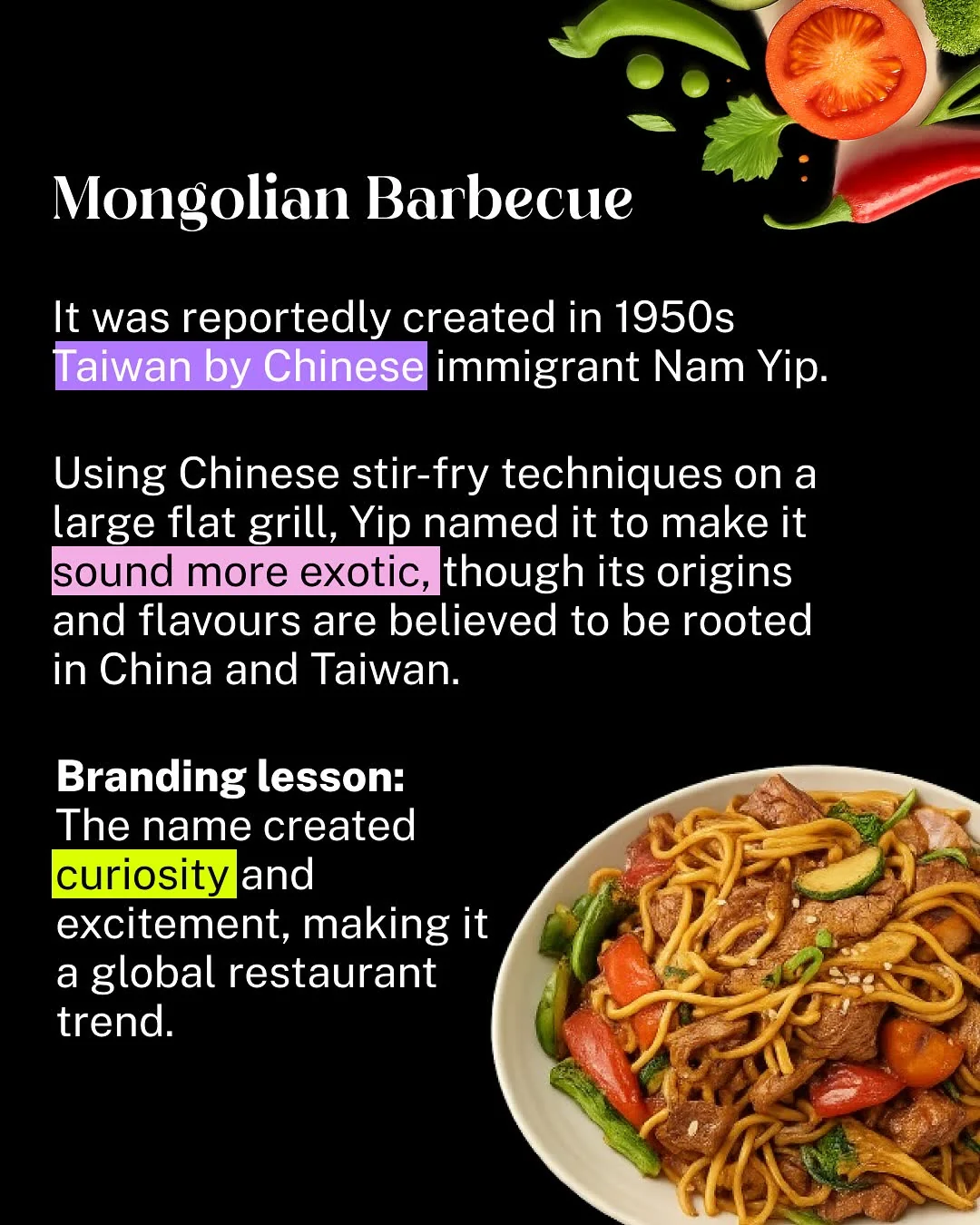
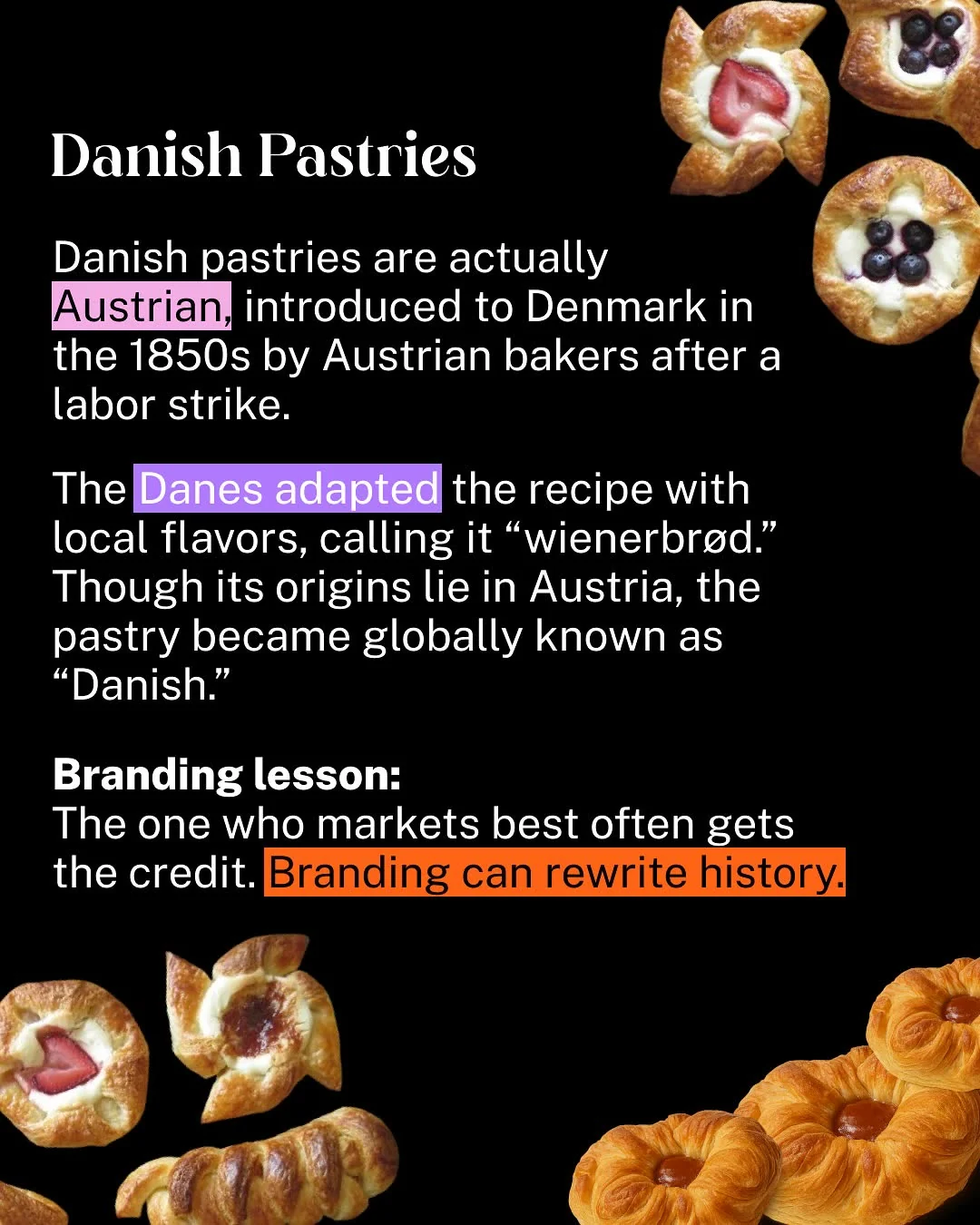
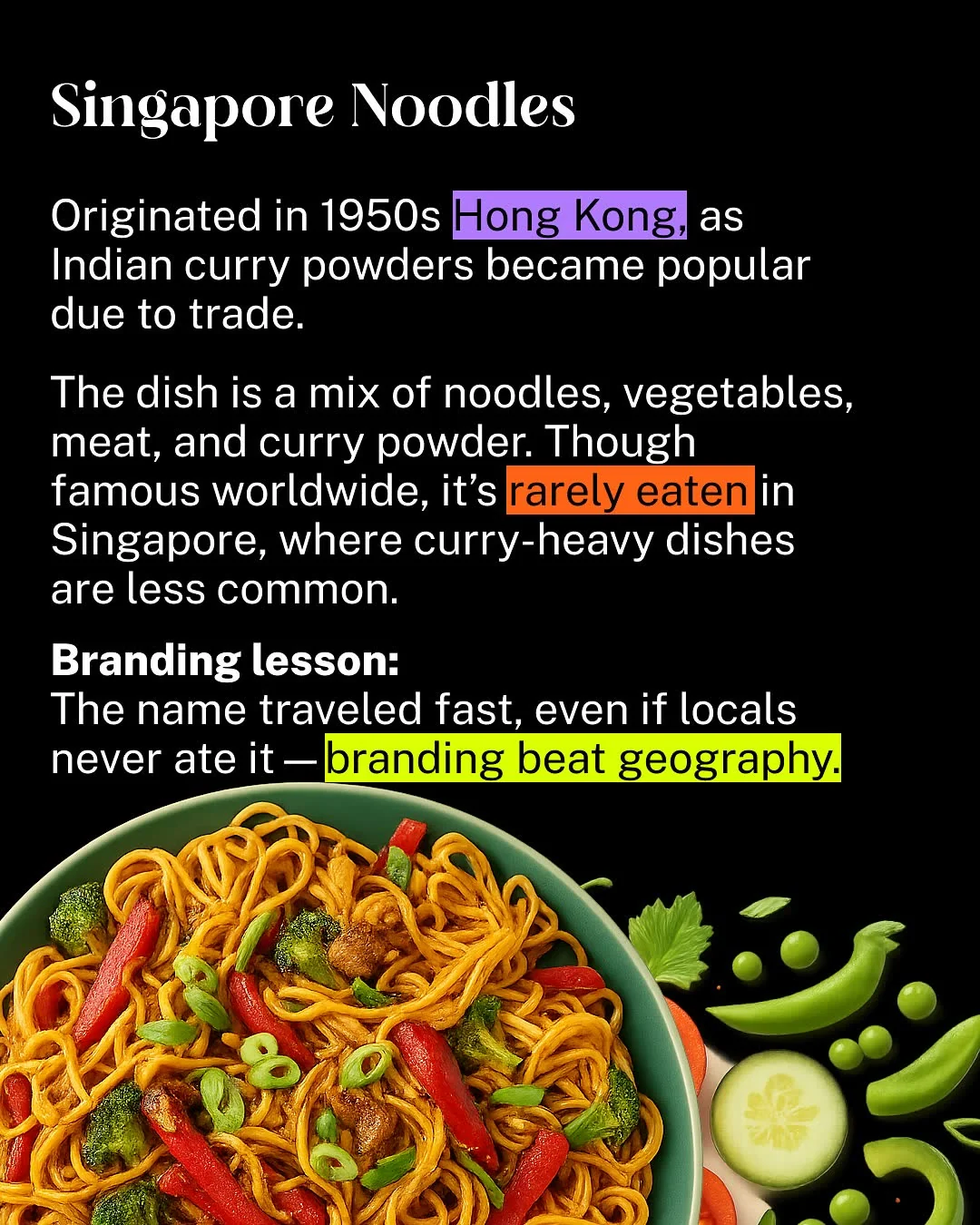
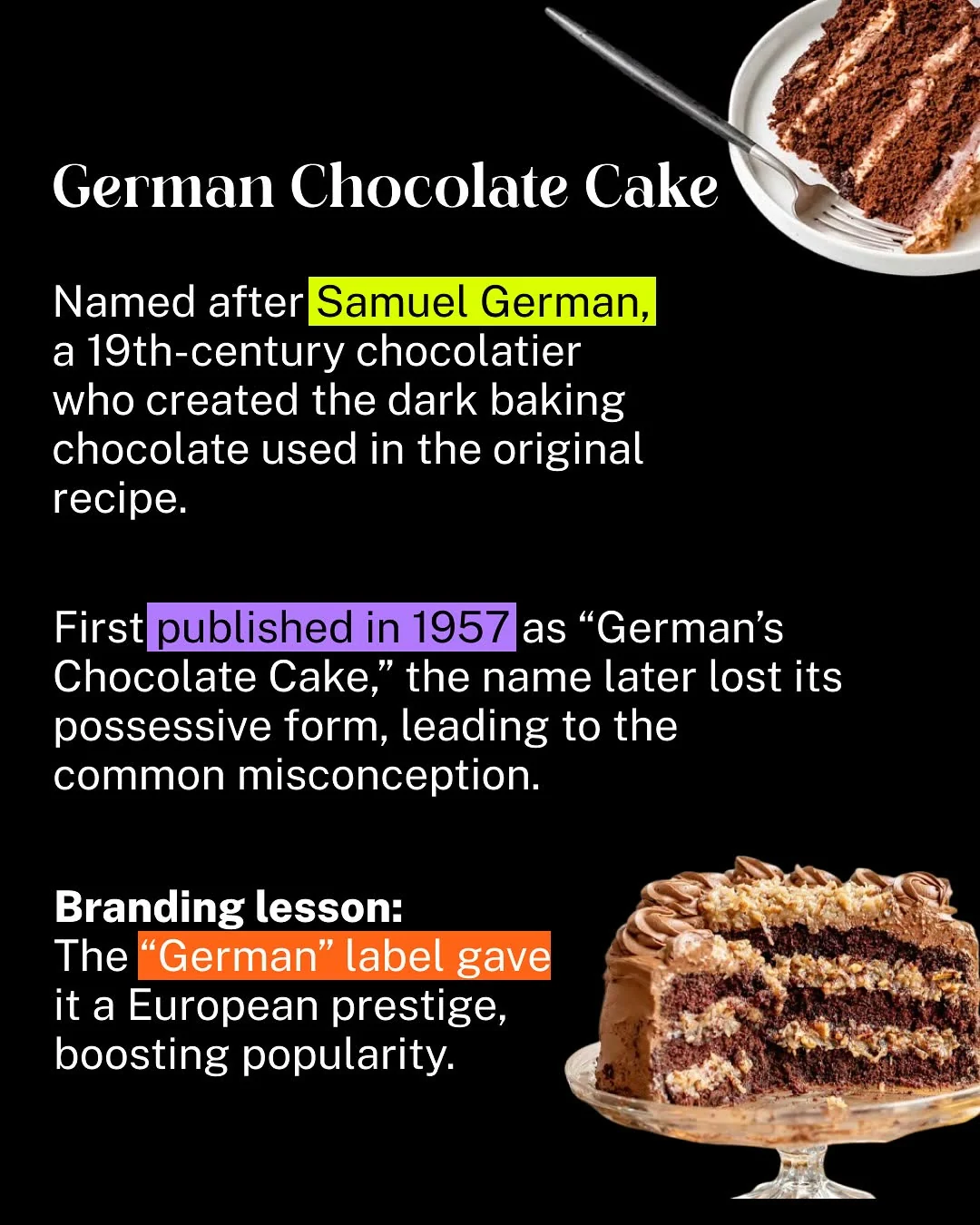
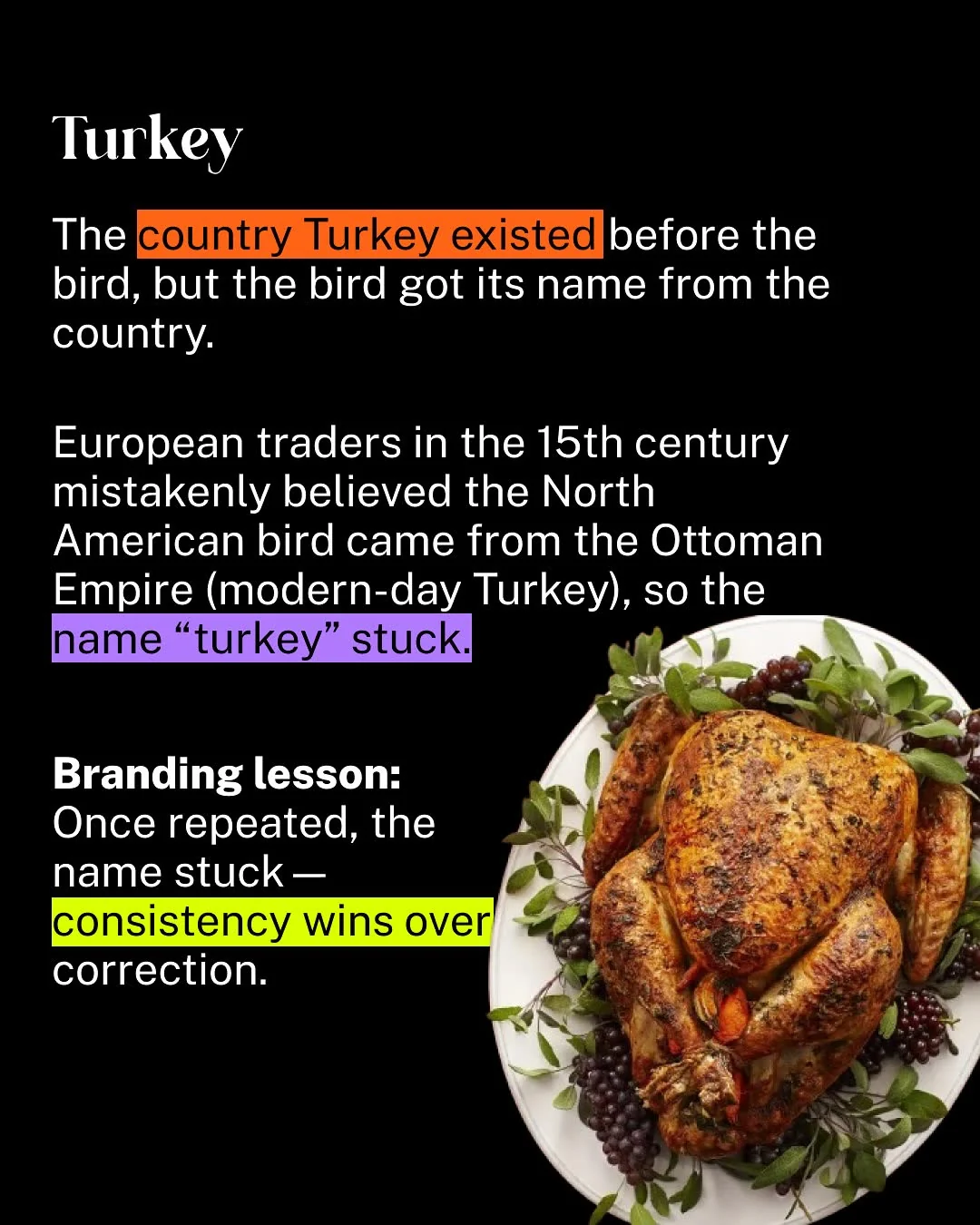
Swipe or use the arrows — the original carousel, slide by slide.
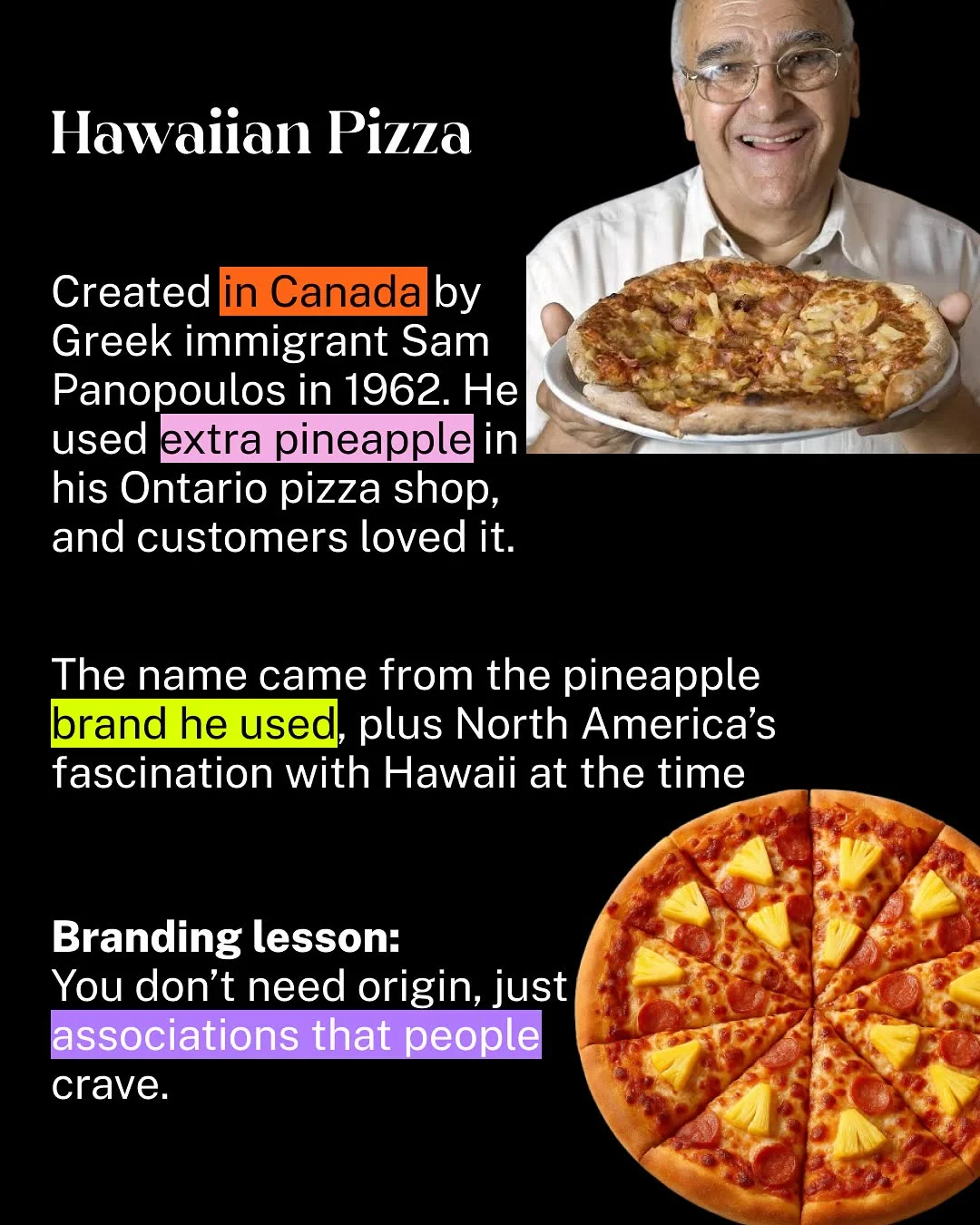
Hawaiian pizza came out of a restaurant in Ontario, Canada. The widely told story is that a Greek-born restaurateur put tinned pineapple on a pizza and borrowed the name off the tin. It has been on menus around the world ever since. The name is inaccurate. The product is fine.
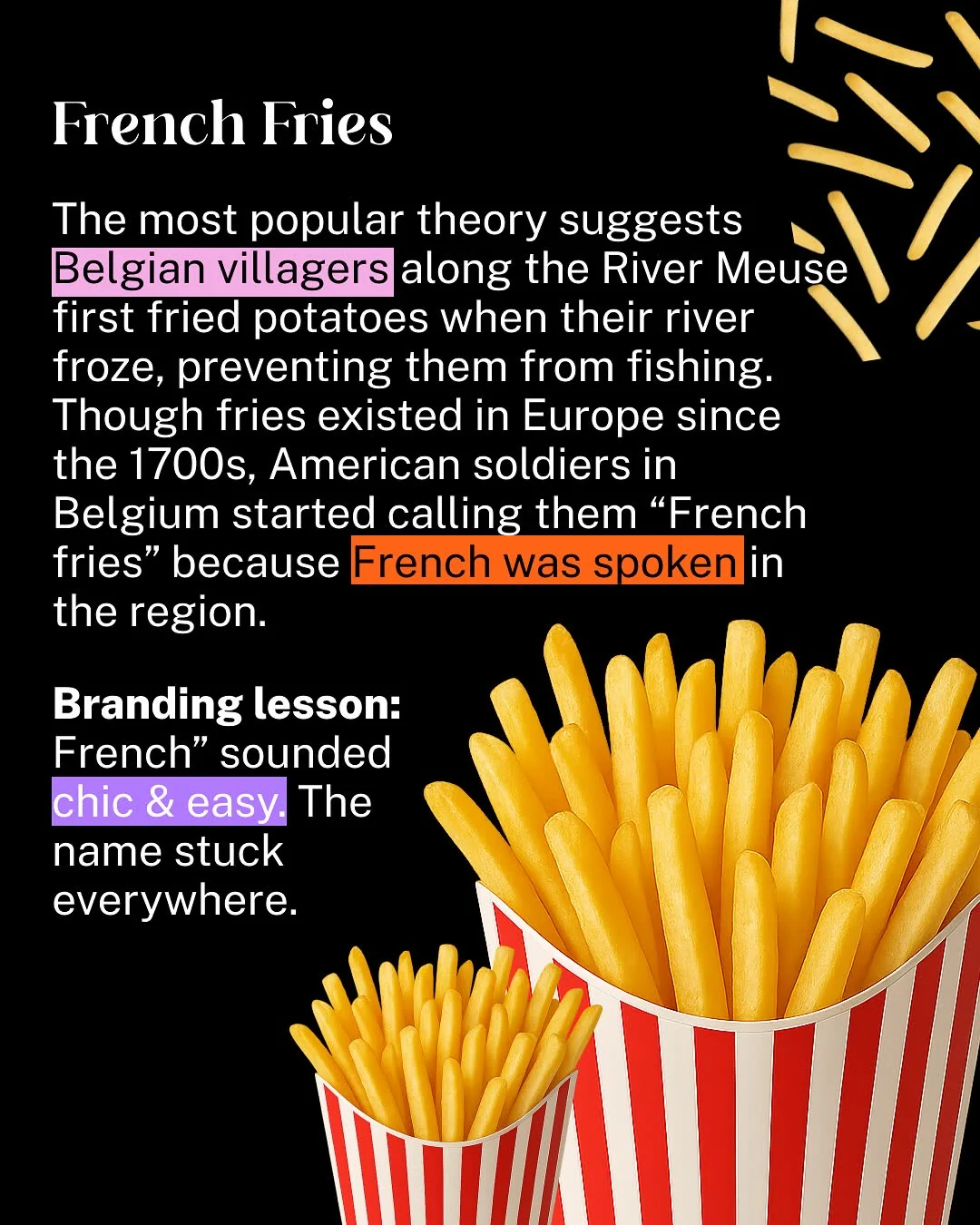
German chocolate cake is named after a man — Samuel German, who developed a dark baking chocolate for an American company. Not the country. French fries have a disputed origin, with Belgium making the loudest claim. Nobody seems to send them back.
I bring these up because of what happens in naming projects. A founder rejects a strong name because "it doesn't really say what we do." Then approves one that says exactly what they do — and is impossible to own, impossible to remember, and wrong sooner than they expect.
A name doesn't need to be true. It needs to be believed.
01 — Believability beats accuracy every time
The test isn't "is this factually correct?" It's "can a customer accept this without stopping to think?" Hawaiian pizza passes. The name sets an expectation — sweet, tropical, pineapple — and the thing on the plate delivers it. It's accurate to the experience, which is the only accuracy customers audit.
Where names actually fail is contradiction, not fiction. A name that promises fresh when the product is shelf-stable, or premium when the price is budget, creates a gap the customer feels at first use. My read: nobody churns because your name is geographically wrong. They churn because it set up something you didn't deliver.
02 — Descriptive names cap your ceiling
If you name the company after the first product, you've priced in a rename. The bath soap brand that becomes a full skincare line, the cold brew brand that adds snacks — the name that was doing free explanatory work is now doing active damage, and you're paying to undo it at exactly the moment you can least afford the distraction.
There's a second cost that founders find out about late. Broadly descriptive words are the hardest kind of name to protect, because your competitors have a legitimate claim on the same plain-English terms. You end up with a name you can use but can't defend, which is a different thing from a name you own. Get an actual trademark attorney to tell you where your shortlist sits — this is the one part of naming you should not do on instinct.
03 — A name you can't own is rented
Memorability gets all the attention in naming conversations. Ownability is what decides the outcome. A name that is distinctive, clearable in your markets, and consistent across your handles compounds for you. A name that's already half-taken means every marketing pound you spend sends some share of that attention to somebody else.
This matters more if you sell across borders. A mark that's clear in the US may be occupied in the UK or the UAE, and the classes you register in matter as much as the word itself. Check the markets you sell in now and the one you're most likely to enter next.
04 — Run these checks before falling in love
This takes an afternoon and saves the expensive version of this problem. Do it on your top three, not your favourite one — testing a single name only confirms what you already decided.
- Say it in a real sentence, out loud: "Hi, this is ___." If you stumble, your customers will too.
- Spell it to someone over the phone. If it needs explaining twice, every support call and every podcast mention costs you.
- Search it plainly — web, app stores, Instagram, Amazon. Look for who is already occupying it, not just whether it's registered.
- Search it again in the category you might sell in three years from now, not just the one you're in.
- Have a trademark attorney check your markets and classes before a designer touches it.
- Look at it small — a jar lid, an app icon, a shipping label. Long descriptive names die at that size.
05 — Sometimes the literal name wins
Descriptive isn't always the wrong call. If discovery happens through search, if trust is the main barrier, or if you're a local service business where people need to know what you do and where you are, a plain name earns its keep. A single-product brand that will stay single-product can be literal without paying for it.
The version I recommend most often is a hybrid: a distinctive name that's yours, plus a short descriptive line locked to it in every application. The name does the remembering, the line does the explaining, and you keep the option to change what the line says without changing the name.
06 — Meaning gets attached, not assigned
Every name you consider strong today was a meaningless noise before somebody filled it. Amazon is a river and sells nearly everything. The way I read it, the name didn't carry the meaning in — the business put the meaning there, over years, through consistent delivery.
So stop asking whether the name explains you. Ask whether you can fill it. A name with room in it is an asset. A name that already says everything has nothing left to earn.
For a small brand this matters more than it does for a large one, not less. A big company can spend its way out of a weak name. You can't. You get one name, a modest budget, and a few years of repetition to make it mean something — so the name has to be worth repeating and legally safe to repeat.
One next step: take your shortlist to a trademark attorney before you take it to a designer. Ownership narrows the list. Taste only picks the winner from what's left.
Founders ask
Does a brand name have to describe what I sell?
No. Descriptive names make the first introduction easier and everything after that harder — they're difficult to own and they lock you into one category. A distinctive name paired with a short explanatory line gives you comprehension now and room to grow later.
Can I trademark a descriptive brand name?
Broadly descriptive names are the hardest to protect, because competitors have a fair claim to the same ordinary words. It depends on your exact wording, your categories and your markets, so have a trademark attorney assess your shortlist before you commit — not after you've printed packaging.